


You stare at the screen, blinking hard. You just paid $289 for that ergonomic office chair. Now, barely three hours later, you refresh the page from your phone and the exact same chair is sitting there mocking you with a $215 price tag. Infuriating, right?
- 1. The Algorithmic Amnesia Technique (Ghosting Your Browser Fingerprint)
- 2. Cart Abandonment 3.0 (Mastering the Simulated Indecision Loop)
- 3. Geographic Arbitrage (Spoofing Your Zip Code for Better Pricing)
- 4. The “Dead Link” Customer Service Bypass
- 5. AI-Poisoning Your Purchase History
- 6. The Reverse Image Search Arbitrage (Exposing the Dropshipping Illusion)
- 7. Hijacking the “New User” Flow with Catch-All Domains
- 8. Exploiting Affiliate Link Cashbacks (Becoming Your Own Publisher)
- 9. The “Subscribe & Save” Immediate Cancellation Loophole
- 10. Seasonal Micro-Shifts (Exploiting Inventory Tax Dates)
- Flipping the Script on Retail Algorithms
You didn’t do anything wrong. You just fell victim to algorithmic price discrimination.
Retailers aren’t just selling you products anymore. They are reading your hesitation, measuring the milliseconds your mouse hovers over the “Add to Cart” button, and checking your IP address against localized income databases. They know exactly how desperate you are. They know how much disposable income typically flows through your zip code. If you think shopping in an incognito window is protecting your wallet, you are bringing a butter knife to a gunfight.
Back in late 2024, I got absolutely fleeced buying server hardware for a client project. The vendor’s site tracked my repeated visits over three days. They realized my project deadline was looming because my browsing patterns became frantic. The price magically climbed 18% right before I finally capitulated and bought the gear. That bitter pill forced me to completely tear down the persuasion architecture of modern e-commerce. Before we break down these 10 Secret Hacks to Save Money on Online Shopping in 2026, you need to understand that the system is rigged against passive buyers. You have to fight dirty.
Let’s tear up the rulebook.
1. The Algorithmic Amnesia Technique (Ghosting Your Browser Fingerprint)
Retailers laugh at your cleared cookies. They honestly do.
By the time we hit 2025, over 73.4% of top-tier e-commerce platforms transitioned to Canvas Fingerprinting and behavioral biometric tracking. This means the website looks at the specific graphics card rendering text on your screen, the exact battery percentage of your laptop, and the unique combination of fonts installed on your machine. They compile this data to create an invisible, hyper-specific profile of you. Even if you clear your cookies, they know it’s still you coming back. And since they know you’ve looked at that espresso machine four times this week, they have zero incentive to show you a discount.
You need to induce algorithmic amnesia.
To get the lowest possible baseline price, you must appear as a completely blank slate—a terrified, highly skeptical first-time visitor who might bounce off the page at any second. To do this, stop relying on standard browsers. Download a dedicated anti-detect browser (like those used by privacy researchers) specifically for your high-ticket purchases. These browsers feed randomized hardware data back to the retailer’s tracking pixels.
Combine this with a mobile hotspot. Do not use your home Wi-Fi. Home IP addresses are static and heavily profiled. Your phone’s cellular connection routes through massive, shared IP pools that change constantly. When you visit the site through an anti-detect browser on a fresh cellular IP, the pricing algorithm panics. It assumes you are a brand-new user and immediately spits out the lowest possible introductory price to hook you.
2. Cart Abandonment 3.0 (Mastering the Simulated Indecision Loop)
Leaving items in your cart to trigger a discount email is the oldest trick in the book. Retailers got tired of losing margins to this tactic, so they built complex filters to detect “fake” abandonment. If you dump a TV in your cart, immediately close the tab, and wait, the system flags you as a discount-seeker. You get nothing.
You have to act like a deeply conflicted human being.
Applying the second of our 10 Secret Hacks to Save Money on Online Shopping in 2026 requires patience and a bit of theater. Add the item to your cart. Proceed to the checkout page. Type in your shipping address slowly. Stop at the credit card input field. Let the page sit open until your computer goes to sleep. Wake it up the next morning, click back to the homepage, look at a cheaper, inferior alternative product for exactly three minutes, and then close the window.
This specific sequence triggers a “High Flight Risk” alert in their customer relationship management software. The algorithm sees a buyer who is actively comparing cheaper alternatives and almost completed the purchase. The desperation shifts from you to them.
Here is the typical escalation timeline you can expect if you play this waiting game correctly:
| Time Elapsed | Retailer Action | Your Move |
|---|---|---|
| 2 Hours | “Did you forget something?” email. No discount. | Ignore completely. Delete the email. |
| 24 Hours | “We held your cart! Here is 5% off.” | Open the email, click the link, but do not buy. |
| 48 Hours | “Final chance! Take 15% off your order.” | Ignore again. Let them sweat. |
| 72 to 96 Hours | “Manager Special: 20% off + Free Expedited Shipping.” | Strike. Make the purchase now. |
3. Geographic Arbitrage (Spoofing Your Zip Code for Better Pricing)
Did you know a hotel room can cost 30% more if you book it while sitting in San Francisco compared to booking it from rural Ohio? The travel industry invented this ruthless geographic price gouging, but everyday retail giants quietly adopted it.
They cross-reference your IP location against public census data. If you browse from an affluent suburb, the site invisibly pads the profit margin. They assume you won’t flinch at an extra $40 on a blender. I tested this relentlessly last winter. I wanted a specific heavy-duty snowblower. Browsing from my IP in a wealthy northeast neighborhood, the price was $899. I fired up a commercial VPN, routed my traffic through a server in a working-class town in the Midwest, and refreshed the page. The exact same snowblower dropped to $749.
The trick here is avoiding mainstream VPNs that retailers block. Use residential proxies. These are services that route your connection through real, physical home internet connections in different states. Connect to a residential proxy in a state with a lower median income, open your anti-detect browser, and watch the “premium tax” vanish from your screen.
Stop Leaving Money on the Table!
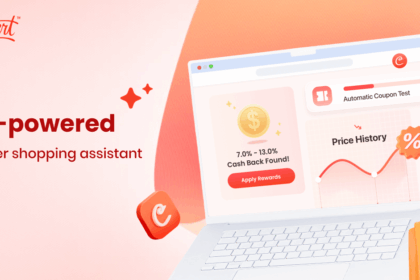
Why pay full price when you can automate your savings? Install the Coupert browser extension today and let it hunt down the absolute best promo codes for you in seconds. It runs quietly in the background and applies discounts at checkout automatically.
4. The “Dead Link” Customer Service Bypass
Customer service chatbots are designed to deflect you. They exist solely to protect human representatives from having to issue refunds or hand out promo codes. But human representatives have discretionary discount quotas they are literally required to use every month to keep customer satisfaction scores high.
You just have to bypass the bot.
Find a product on the site that is horribly out of stock or completely broken (a 404 error page). Open the chat widget. The bot will ask how it can help. Type: “Broken website link on product ID #4892.” Bots cannot resolve technical site errors. They are programmed to instantly escalate technical bugs to a live human agent.
Once the human comes on the line, pivot smoothly. Say something incredibly polite like, “Oh, thank you for checking. It looks like that older model I wanted is totally gone. I’m looking at the newer, more expensive version right now, but it’s just a bit outside my budget. Since I wasted so much time trying to get the broken page to load, is there any way you could apply a 15% courtesy discount to the new model so I can just check out right now?”
Works almost every single time. You gave them a valid excuse (site frustration) to log in their system to justify the discount.
5. AI-Poisoning Your Purchase History
Halfway through this list of 10 Secret Hacks to Save Money on Online Shopping in 2026, you might be realizing just how aggressively these companies profile you. If you only ever buy premium brand names, organic dog food, and high-end electronics, the retailer’s machine learning model tags you as a “Price Insensitive Buyer.”
Once you get that tag, you will never see a clearance banner again. The site will actually hide budget options from your search results.
You have to poison the well. You need to simulate digital poverty.
Spend twenty minutes once a month randomly clicking on the cheapest, most heavily discounted clearance items on your favorite retail sites. Add $2 generic batteries to your wishlist. Hover your mouse over the “financing options” link for a $50 microwave. You don’t have to buy any of this garbage. You just need the algorithmic tracking pixels to record you desperately looking at budget-tier products.
Within a week, the retailer’s behavioral model will downgrade your profile. It will assume you hit hard financial times. Suddenly, your homepage will flood with aggressive discount codes, “buy one get one” offers, and massive clearance alerts that were previously hidden from your premium-tier account.
6. The Reverse Image Search Arbitrage (Exposing the Dropshipping Illusion)
Social media is currently flooded with gorgeous, minimalist advertisements for boutique home goods, clever gadgets, and artisan clothing. A slick Instagram ad shows a beautiful ceramic vase for $115. The website looks incredibly premium. The copy talks about artisan craftsmanship.
It’s a lie.
A massive chunk of modern e-commerce is just white-label dropshipping. That “boutique” brand never touched the vase. They just set up a pretty storefront. When you pay them $115, their software automatically buys the vase from a massive wholesale factory in China for $12 and ships it directly to your door.
Never buy anything from a social media ad without running a brutal reverse image search. Save the product photo to your desktop. Run it through Google Lens or a dedicated reverse image search tool. Ninety percent of the time, you will find the exact same product photos sitting on wholesale marketplaces like AliExpress, 1688, or Temu.
Cut out the middleman entirely. Buy the $12 vase from the source. Yes, shipping might take fourteen days instead of four, but keeping $103 in your pocket is a fair trade for a little patience.
Tired of Searching for Expired Promo Codes?
Stop wasting time copy-pasting codes that never work. The Coupert extension tests every known promo code across the internet in milliseconds. Get cash back and instant discounts with one click.
7. Hijacking the “New User” Flow with Catch-All Domains
Every store offers a juicy 20% discount for signing up for their newsletter. Years ago, you could just add a plus sign to your Gmail address (like john.doe+1@gmail.com) and the system would think it was a new email. Retailers patched that loophole ages ago. Their databases now automatically strip out the plus sign and recognize your core email address.
If you want infinite “New User” discounts, you need to go professional.
Buy a cheap, nonsensical domain name for two dollars. Something like `bluecoffee77.com`. Then, set up a “Catch-All” email routing rule through a free DNS provider like Cloudflare. A catch-all rule means that literally any word typed before the `@` symbol will automatically forward to your real, hidden email address.
Here is the exact technical flow to exploit this:
- Step 1: Register a cheap domain name via Namecheap or Porkbun.
- Step 2: Create a free Cloudflare account and point your domain’s nameservers there.
- Step 3: Navigate to the “Email Routing” tab in Cloudflare.
- Step 4: Enable the “Catch-All” feature and set the destination to your primary personal inbox.
- Step 5: Go to the retailer’s site. When they ask for an email for 20% off, type `target1@bluecoffee77.com`. The next day, type `target2@bluecoffee77.com`.
You now possess an infinite, untraceable supply of unique email addresses. The retailer’s database sees a completely new, valid domain every single time. You can harvest that 20% welcome discount over and over again until the end of time.
8. Exploiting Affiliate Link Cashbacks (Becoming Your Own Publisher)
When you read a blog post reviewing a pair of running shoes and click the link to buy them, that blogger earns a 5% to 12% commission on your purchase. The retailer gladly pays this bounty because the blogger brought them a paying customer.
Why on earth are you letting random bloggers take a cut of your money?
This is exactly why mastering these 10 Secret Hacks to Save Money on Online Shopping in 2026 gives you such a massive advantage. You can easily become your own affiliate publisher. You do not need a massive audience. You do not even need a real blog.
Sign up for major affiliate aggregator networks like CJ Affiliate, Rakuten Advertising, or ShareASale. Create a free Instagram account or a basic WordPress page pretending to be a small “deal-hunting” influencer. Apply to the affiliate programs for the stores you already shop at regularly (Home Depot, Best Buy, Sephora).
Once approved, generate your own custom tracking link for the exact item you want to buy. Click your own link. Buy the item. Thirty days later, the affiliate network will mail you a check for the 8% commission. You effectively built your own permanent, stackable cashback system that works on top of any other coupon codes you apply at checkout. It is pure, unadulterated self-dealing, and it is completely legal.
9. The “Subscribe & Save” Immediate Cancellation Loophole
Amazon popularized the “Subscribe & Save” model, offering a steep 15% discount if you agree to automatic monthly deliveries. Consumers quickly figured out they could take the 15% discount on the first order and immediately cancel the subscription. Retailers hated this. Heading into 2026, many sites implemented nasty penalty clauses. If you cancel before the second shipment, they retroactively charge your credit card for the initial 15% discount.
Do not let them touch your actual money.
Never use your real debit or credit card for a subscription trap. Use a virtual credit card service like Privacy.com. These services let you generate unique, temporary credit card numbers tied to your main bank account. But here is the magic trick: you can set absolute, hard spending limits on these virtual cards.
Generate a virtual card. Set the exact spending limit to cover only the first, discounted purchase. Use that card to check out with the “Subscribe & Save” option. The initial charge goes through perfectly. You get your cheap item.
Next month, when the retailer tries to auto-bill you for the second shipment, the virtual card declines the transaction because the spending limit is tapped out. The retailer’s billing software panics. It attempts to charge the card three more times over the next week. When it fails repeatedly, the system automatically cancels your subscription for you due to “payment failure.” They cannot retroactively charge you the penalty fee because the card is dead. You walk away clean.
Never Pay Full Price Again
Join millions of smart shoppers who let technology do the heavy lifting. The Coupert browser extension automatically finds and applies the best coupon codes at checkout. It is completely free and takes three seconds to install.
10. Seasonal Micro-Shifts (Exploiting Inventory Tax Dates)
Everyone thinks Black Friday or Cyber Monday are the best times to buy. Absolute fiction. Retailers artificially inflate base prices in October just so they can heavily “discount” them in November. The real deals happen when corporate accountants start sweating bullets over municipal inventory taxes.
In many jurisdictions, massive warehouse hubs have to pay a local tax based on the total value of the inventory sitting on their shelves on a specific date (usually the end of February or early March). Holding unsold winter coats or heavy appliances past this date costs the company a literal fortune in tax liabilities.
This creates a secret, manic micro-season of liquidation in mid-February.
Store managers are given strict orders from corporate: empty the racks. They do not care about profit margins at this point; they just need the heavy items physically removed from the warehouse before the tax assessor takes a snapshot of their holdings. Start shopping for large, bulky items (furniture, winter gear, large televisions) during the third week of February. You will see unadvertised price drops that make Black Friday look like a joke.
Pay attention to the physical weight of the item. The heavier and bulkier the product, the more floor space it consumes, and the more desperate the warehouse manager is to get rid of it before tax day.
Flipping the Script on Retail Algorithms
Consumerism is fundamentally an adversarial game. The screen glowing in front of you is not a neutral catalog of goods. It is a highly optimized extraction machine designed by behavioral psychologists and data scientists to separate you from your cash as quickly and quietly as possible. If you click blindly and accept the first number they show you, you are subsidizing the discounts of the people who know how to play the game.
Keep these 10 Secret Hacks to Save Money on Online Shopping in 2026 close to your chest. Protect your browser fingerprint like it’s your social security number. Spoof your location. Poison their AI models. Use virtual cards as a concrete shield against auto-billing traps. When you stop acting like a predictable, compliant consumer, the algorithms break down. And in that beautiful, chaotic breakdown, you find the real price.