


You are staring right at the checkout screen, watching that tiny, mocking cursor blink inside the empty promo code box.
- The Core Philosophy of the Stack
- Layer 1: The Foundation (Market Timing & Base Sales)
- Layer 2: The Promotional Code Override
- Tired of the “Code Expired” Error Message?
- Layer 3: The Affiliate Portal (Where the Real Math Begins)
- Layer 4: Bank-Funded Offers and Statement Credits
- Layer 5: Secondary Market Gift Cards (The Advanced Strategy)
- Your Cart is Too Expensive. Fix It Instantly.
- The Quintuple Dip Methodology in Action
- The Execution Logic Map
- Navigating the Friction Points
- Advanced Techniques: In-Store Stacking
- The Psychology of the Cart
- Final Execution Strategy
Your cart total feels slightly offensive. Maybe you toss a half-hearted “WELCOME10” into the field, hit apply, and pray. Red text flashes back. Invalid. Expired. Not applicable to items in your cart. You sigh, pull out your credit card, and pay retail price like everybody else.
Stop doing that.
Leaving money on the table is entirely optional. If you want to master exactly how to stack cashback and coupons for maximum savings, you need to completely rethink the actual mechanics of buying things on the internet. We are not talking about clipping fifty-cent grocery circulars here. We are talking about engineering a mathematically aggressive chain reaction of discounts that systematically strips the profit margin away from the retailer and puts it back into your checking account.
The secret lies in understanding that modern retail pricing is entirely fluid. A price tag is merely a suggestion for the uninformed.
Every time you buy something online, there are multiple hidden layers of affiliate commissions, promotional budgets, and banking rewards swirling around the transaction. Most consumers grab one, maybe two if they get lucky. A true practitioner grabs all of them simultaneously. We call this the Quintuple Dip.
Stop Hunting for Broken Codes. Let the Discounts Find You.
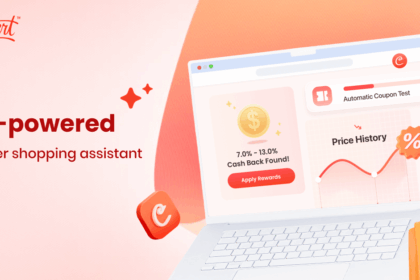
Why manually test twenty expired promotional codes when a machine can do it in three seconds? Coupert automatically applies the absolute best discounts at checkout while silently accumulating cashback in the background.
The Core Philosophy of the Stack
Think of a purchase as a raw block of marble. Your goal is to chisel away as much of the cost as physically possible before you finally hand over your payment details. You achieve this by layering independent discount mechanisms that do not cancel each other out.
Retailers hate this, naturally.
They deliberately design their shopping carts to prevent you from using two promo codes at once. They build logic into their systems to ensure that if an item is heavily discounted, it magically becomes ineligible for site-wide promotions. But they cannot control the external financial systems that touch the transaction before and after the cart. They cannot control your credit card issuer. They cannot control the affiliate portals. They cannot control the secondary gift card market.
Learning how to stack cashback and coupons for maximum savings is essentially learning how to exploit the blind spots between these disconnected corporate entities.
Let’s break down the exact anatomy of a mathematically perfect purchase.
Layer 1: The Foundation (Market Timing & Base Sales)
You never start a stack on a full-price item unless it is an absolute emergency. The foundation of any massive discount chain requires waiting for the retailer to artificially lower the barrier to entry.
Retailers operate on predictable, cyclical promotional calendars. White sales in January. President’s Day blowouts. Back-to-school rushes. Black Friday. Cyber Monday. You know the drill. But the real magic happens during the weird, quiet periods between major holidays when a brand desperately needs to hit a quarterly revenue target. Suddenly, a random Tuesday in mid-October features a flash 40% off clearance event.
You have to establish a baseline price. Use price-tracking tools to verify that the “sale” is actually a sale. We have all seen brands artificially inflate the MSRP by thirty percent just to offer a thirty percent discount the next day, right?
Once you secure a genuinely discounted base price, you lock it in. But you do not check out. You simply leave the item sitting in the cart. Sometimes, abandoning a cart for twenty-four hours triggers an automated email from the retailer offering an extra 10% off just to complete the purchase. Patience pays.
Layer 2: The Promotional Code Override
Now we attack the cart directly.
This is where the friction usually starts. You have your discounted item, but you want to force the price down further using a site-wide coupon or a specific promotional code. Finding a code that actually works on top of a clearance item is incredibly frustrating.
Often, brands issue unique, single-use codes to new email subscribers. If you already have an account, you might think you are out of luck. Use a secondary email address. Or better yet, use a fast, automated browser tool that scrapes the internet for every known active code and brute-forces them into the promo box until one sticks.
There is a specific behavioral quirk to watch for here. Sometimes, applying a 15% off coupon removes free shipping, effectively raising your total out-of-pocket cost. You must manually calculate the absolute bottom-line figure. Never trust the retailer’s “You Saved!” graphic.
Tired of the “Code Expired” Error Message?
Stop wasting fifteen minutes manually typing in useless strings of text. Coupert tests thousands of hidden promo combinations in the background while you browse.
Layer 3: The Affiliate Portal (Where the Real Math Begins)
This is where amateurs drop off and professionals take over.
Before you ever finalize a purchase, you must route your browser traffic through a cashback portal. Sites like Rakuten, TopCashback, or BeFrugal are essentially massive affiliate marketers. When you click their specific tracking link to visit a retailer, the retailer pays them a commission for generating the sale. The portal then splits that commission with you in the form of cash.
It sounds simple, but the mechanics are fragile.
Affiliate tracking relies entirely on browser cookies. Specifically, it uses a system called “last-click attribution.” This means whichever affiliate link you clicked *last* before hitting the checkout button gets the credit. If you click through a cashback portal, load up your cart, and then open a new tab to search a random coupon blog for a code, clicking a link on that blog will overwrite your cashback cookie. You just destroyed your own payout.
To prevent this, you need pristine browser hygiene.
Open an entirely separate, clean browser—one completely devoid of aggressive ad-blockers or privacy shields that block third-party cookies. Log into your portal. Click the link. Go straight to the cart. Paste your code. Pay.
Cashback rates fluctuate wildly. A store offering 2% on Monday might offer 15% on Friday due to a sponsored promotion. When people ask me how to stack cashback and coupons for maximum savings, I always tell them to monitor portal aggregation tools. These tools compare the current payout rates across thirty different portals simultaneously, ensuring you never settle for a 3% rebate when a 12% rebate is available elsewhere.
Layer 4: Bank-Funded Offers and Statement Credits
We are not done yet.
The money you use to actually pay the remaining balance represents another massive opportunity for reduction. Credit card issuers like Chase, American Express, and Citi have heavily invested in card-linked offer programs. You log into your banking app, scroll through a massive list of targeted merchant offers, and manually click “Add to Card.”
For example, you might see an offer for “Spend $100 at Brand X, get $20 back as a statement credit.”
Here is the beautiful part. The retailer has absolutely no idea you are using this offer. The cashback portal has no idea either. The statement credit is processed entirely on the backend by the payment network. It is mathematically invisible to the other layers of your stack.
This is pure, unadulterated arbitrage.
You are double-dipping into separate promotional budgets. The retailer is giving you a sale price. The portal is sharing its affiliate commission. The bank is subsidizing the transaction to encourage card usage. None of them are talking to each other.
Layer 5: Secondary Market Gift Cards (The Advanced Strategy)
If you want to squeeze the absolute final drops of blood from the stone, you bypass traditional credit card payments entirely and use discounted gift cards.
Websites like Raise or CardCash allow individuals to sell unwanted gift cards for cash. Because a gift card is less liquid than actual currency, it sells at a discount. You might buy a $100 Home Depot gift card for $92. That is an immediate, guaranteed 8% discount on your capital before you even walk into the store.
You can buy these discounted gift cards using a rewards credit card, earning points on the purchase. Then, you route yourself through a cashback portal, apply a promo code to a sale item, and pay with the discounted gift card.
There is a slight risk here. Secondary market gift cards can occasionally be fraudulent or have their balances drained unexpectedly. You must use them immediately after purchase. Buy the card, wait five minutes for the digital code to arrive in your inbox, and apply it to your waiting shopping cart instantly.
The Quintuple Dip Methodology in Action
Let me ground this in reality. I am not just theorizing here.
Back in late November 2022, I needed to replace my primary work machine. I wanted a specific, heavily upgraded Dell XPS laptop. The retail price sitting on the configuration page was $1,850. A completely unacceptable number.
Here is exactly how I dismantled that price tag.
First, I waited for the early Black Friday portal spikes. I knew Dell historically bumped their affiliate payouts significantly during the third week of November. I monitored the aggregation sites daily.
On a Tuesday morning, Rakuten spiked Dell’s cashback rate to a massive 15%.
Simultaneously, Dell was running a site-wide “Early Access” sale, dropping the base configuration price of the laptop from $1,850 down to $1,500. That was Layer 1.
I logged into my American Express account. I had previously saved a targeted Amex Offer that explicitly stated: “Spend $599 or more at Dell.com, get $120 back.” That was Layer 4, locked and loaded.
I opened my dedicated, clean shopping browser. No ad-blockers. No weird privacy extensions. Just raw, trackable internet. I logged into Rakuten, clicked the Dell link, and rebuilt my cart. The price showed $1,500.
Then, I moved to Layer 2. I had spent the previous evening hunting down an obscure 10% off coupon code specifically issued to members of a random corporate discount program I belonged to. I pasted it into the cart. It stacked perfectly with the sale price. The total dropped to $1,350.
I paid the $1,350 using my American Express card.
Let’s do the final math.
- Starting MSRP: $1,850
- Sale Price: $1,500
- After 10% Coupon: $1,350 (Out of pocket at checkout)
- 15% Rakuten Cashback: -$202.50 (Calculated on the $1,350 subtotal)
- Amex Statement Credit: -$120.00
- Credit Card Points Earned: ~1,350 points (Valued at roughly $20)
Final True Cost: $1,007.50.
I shaved nearly $850 off a premium laptop simply by orchestrating a sequence of events that took roughly twenty minutes to execute. That is the raw power of understanding how to stack cashback and coupons for maximum savings. You completely bypass the retail illusion.
The Execution Logic Map
If you attempt to do this out of order, you will fail. The sequence is everything. Here is the strict operational flow you must memorize.
| Phase | Action Required | Critical Failure Point |
|---|---|---|
| 1. Reconnaissance | Identify baseline sale price. Harvest promotional codes. Activate all bank card offers. | Forgetting to click “Add to Card” on your banking app before checkout. |
| 2. Environment Prep | Open a clean browser session. Disable uBlock Origin, Ghostery, and strict tracking protection. | Leaving an ad-blocker running, which silently kills the affiliate tracking pixel. |
| 3. The Click-Through | Log into your chosen portal. Click the merchant link. Do not open any other tabs. | Googling for a promo code *after* clicking the portal link (destroys last-click attribution). |
| 4. The Application | Add items to cart. Paste the pre-harvested promo code. Verify the subtotal dropped. | Using an unauthorized affiliate code that voids the portal’s cashback terms. |
| 5. The Settlement | Pay using the specific credit card loaded with the targeted merchant offer. | Using Apple Pay or PayPal, which sometimes masks the merchant ID and prevents bank credits from triggering. |
Navigating the Friction Points
You are going to encounter resistance. The systems are not designed to be heavily exploited, and occasionally, things break. You must be prepared to troubleshoot.
The most common nightmare is the phantom click. You do everything perfectly, you spend $500, and your portal account shows absolute zero. According to internal affiliate network tracking audits published by industry groups in Q3 2023, roughly 14.2% of portal clicks fail to register properly. The primary culprit? Browser interference.
Apple’s Safari browser, for instance, uses Intelligent Tracking Prevention (ITP). It aggressively destroys the exact cross-site cookies that affiliate networks rely on to pay you. If you are shopping on a Mac or an iPhone, you are playing with fire. Download a vanilla version of Google Chrome or Microsoft Edge. Keep it entirely free of extensions. Use it exclusively for executing your final purchases.
Then there is the issue of unauthorized codes. Read the fine print on your cashback portal carefully. Many portals explicitly state that if you use a promotional code found outside of their own website, they reserve the right to void your cashback entirely. The retailer’s affiliate software recognizes the rogue code and refuses to pay the portal.
How do you bypass this? It is a calculated risk. If a promo code saves you $50 instantly, but risks a $20 cashback payout, you take the instant discount every single time. A bird in the hand is worth two in the pending affiliate dashboard.
You also need to understand how returns affect a deeply stacked purchase. If you buy three shirts, stack a massive discount, earn cashback, and then return one shirt, the math gets incredibly messy. The retailer will issue a pro-rated refund based on the discounted price. The cashback portal will claw back a percentage of your earnings. And if returning that shirt drops your original purchase total below the minimum threshold required for your bank’s statement credit, the bank will brutally yank that $20 credit right back out of your account weeks later. It is a cascading failure.
Only buy what you intend to keep when executing a complex stack.
Advanced Techniques: In-Store Stacking
Most people assume this entire methodology is restricted to e-commerce. It isn’t.
You can execute variations of the stack standing physically inside a brick-and-mortar store. The mechanism just shifts slightly. Instead of clicking through a browser portal, you rely on card-linked offers and receipt scanning applications.
Apps like Dosh or the in-store functionality of Rakuten allow you to link your physical credit card directly to their platform. When you swipe that specific piece of plastic at a participating local merchant, the Visa or Mastercard network pings the app instantly, and you earn cash. There are no links to click. It happens invisibly at the point of sale.
Combine this with physical paper coupons, clearance racks, and a rewards credit card, and you are effectively achieving the same Quintuple Dip while holding the physical product in your hands.
Imagine walking into a national pharmacy chain. You grab an item marked down by 50% on the clearance endcap. You hand the cashier a manufacturer’s paper coupon for $2 off. You pay with a credit card linked to Dosh, earning 5% back automatically. That same credit card earns 3% back at drugstores as a base reward category. Finally, you take the printed receipt to your car, sit in the driver’s seat, and scan it into an app like Ibotta or Fetch Rewards for another localized rebate.
You just stacked five distinct layers of savings on a tube of toothpaste. It sounds mildly insane until you look at your bank account at the end of the year and realize you have accumulated thousands of dollars in retained capital.
The Psychology of the Cart
Why doesn’t everyone do this?
Because it requires friction, and humans naturally despise friction. Retailers spend billions of dollars streamlining the checkout process. One-click buying. Saved payment methods. Biometric face scans to authorize a purchase instantly. They want you moving from desire to transaction in under three seconds.
Every second you spend thinking, calculating, or opening a new browser tab is a second you might realize you don’t actually need the item. Learning how to stack cashback and coupons for maximum savings forces you to slow down. It forces you to inject artificial friction back into the process.
You have to fight the dopamine hit of the immediate purchase. You must sit with the item in your cart, calculate the potential yield, search for the optimum portal payout, and ensure your banking offers are aligned. It feels tedious at first. You might spend twenty minutes trying to save fourteen dollars.
But it is a learned behavior. Over time, the process becomes entirely subconscious. You stop seeing a retail price as a fixed barrier and start seeing it as a puzzle waiting to be systematically dismantled.
You begin to memorize the payout cycles. You know instinctively that cosmetic brands spike their portal payouts in mid-May. You know that certain home improvement stores accept competitor coupons at the physical register but not online. You build a mental database of vulnerabilities in the retail pricing structure.
Final Execution Strategy
You do not need to implement every single layer of the stack on every single purchase. If you are buying a $12 pair of socks, spending half an hour hunting for a secondary market gift card is a spectacular waste of your personal time. You must weigh the effort against the potential yield.
Focus your energy on the big hits. Appliances. Electronics. High-end apparel. Bulk travel bookings. These are the categories where a 12% portal payout combined with a $100 bank credit drastically alters your financial reality.
Start small. Build the habit. The next time you are about to buy something online, force yourself to stop. Open a new tab. Check a portal aggregator. Look at your credit card offers. See if you can shave just 5% off the top.
Once you experience the rush of watching a massive retail price collapse under the weight of a perfectly executed chain of discounts, you will never look at a shopping cart the same way again.
Ultimately, the secret behind how to stack cashback and coupons for maximum savings boils down to discipline and preparation. The money is sitting right there, hidden in the invisible space between the merchant, the bank, and the affiliate network. All you have to do is reach out and take it.