


You click confirm on a massive online purchase and immediately feel that tiny, annoying twist in your gut. You just bought a $1,200 laptop. You used a flat 2% cash back card. You got $24 back. Not bad, right?
- The Core Mathematics of the Stacking Game
- The Affiliate Portal Playbook
- The Gift Card Shuffle
- Card-Linked Offers: The Silent Accumulator
- The Dining Network Matrix
- The Sequential Trigger Protocol
- Receipt Scanning: The Final Frontier of Micro-Stacking
- The Travel Stacking Illusion (And How to Actually Win)
- Psychological Traps and Points Devaluation
- The Hidden Power of Transfer Partners
- Friction Points and Troubleshooting the Stack
- Building Your Personal Stacking Machine
Wrong. It is actually terrible.
Because while you were patting yourself on the back for that measly twenty-four bucks, someone else bought that exact same machine, from the exact same retailer, and walked away with $180 in total value. They did not have a special discount code. They did not negotiate with customer service. They simply understood the underlying math of reward stacking.
Back in late 2021, I was staring at a checkout screen for a flight to Tokyo. The base fare was steep. I almost clicked buy using just my standard travel card. But then I stopped, cleared my cookies, fired up a specific sequence of portals, and applied a hidden merchant offer I had activated three weeks prior. That five-minute pause netted me enough extra points to cover three nights in a Shinjuku hotel. That specific moment completely rewired how I look at online spending.
You are leaving money on the table every single time you swipe your plastic or hit a checkout button without a heavy-duty routine in place. The banks count on your laziness. Retailers bank on your impatience. Defeating them requires a completely different mindset.
We are going to break down exactly how you can stop bleeding value. If you want to know the absolute Best Ways to Double Dip on Cashback and Credit Card Rewards, you have to stop looking at your credit card as the final destination. Your card is just the baseline. It is the absolute bare minimum starting point.
The Core Mathematics of the Stacking Game
Most people think linearly. They buy a coffee, they get a point. They buy a television, they get some points. This is exactly how the massive banking conglomerates want you to operate. They dangle a shiny 1.5% or 2% return, hoping it blinds you to the massive margins they pull from merchant interchange fees.
Stacking is about thinking in layers. You want to trigger multiple payout mechanisms simultaneously from a single transaction.
Let us look at a highly specific metric. According to the 2023 Merchant Affiliate Tracking Index, nearly 18% of manual portal clicks fail to register properly due to aggressive ad-blockers and user error. People try to stack, mess up the cookie tracking, and get nothing. To fix this, you need a foolproof methodology. You need tools that force the tracking to stick, and you need to link your accounts so the rewards fire off invisibly in the background.
A true double dip usually involves combining a high-earning category multiplier on a specific credit card with a third-party payout system. A triple dip adds a merchant-specific offer. A quadruple dip throws in a discounted gift card. We will cover all of them.
Stop Missing Out on Hidden Cashback
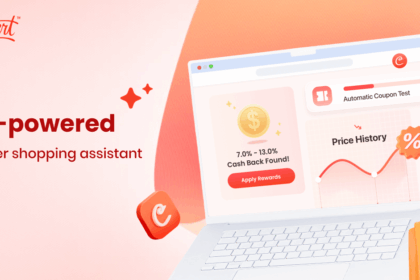
Why manually hunt for promo codes and affiliate portals when you can automate the entire process? Coupert runs silently in your browser, testing every known code and activating cashback multipliers instantly before you pay.
The Affiliate Portal Playbook
If you buy anything online without clicking through a shopping portal first, you are essentially throwing five-dollar bills out your car window on the highway. Shopping portals act as middlemen. Retailers pay them a commission for driving traffic to their sites. The portal then turns around and hands a chunk of that commission back to you.
This is where the magic happens.
You use a credit card that earns 2x points on all purchases. You click through a portal offering 10% back at a specific clothing retailer. You just turned a 2% return into a 12% return. This is the foundational layer of the Best Ways to Double Dip on Cashback and Credit Card Rewards. It requires almost zero effort, yet the majority of consumers ignore it.
But the portal game is highly fragmented. Rates fluctuate wildly. On Monday, Rakuten might offer 2% at Macy’s. By Wednesday, TopCashback might be offering 8%. Friday rolls around, and an airline portal like the American Airlines AAdvantage eShopping mall might offer 5 miles per dollar. Tracking this manually is a nightmare.
You have to understand how browser cookies work to make sure you actually get paid. When you click a portal link, it drops a tracking cookie on your browser. If you open another tab to check a review, or run a random promo code you found on a sketchy forum, you risk overwriting that cookie. The retailer then attributes the sale to the promo code site, not your portal. Your cashback vanishes.
I learned this the hard way. I once lost out on $85 in cashback from a major home improvement store because I opened a new tab to double-check the dimensions of a refrigerator. The session broke. The tracking failed. I spent an hour on the phone fighting for a manual credit adjustment, which was ultimately denied.
Automating the Portal Friction
Because of that exact friction, I completely changed my approach. Manual clicking is for amateurs. You need a reliable browser extension that handles the tracking attribution automatically.
This is precisely why I heavily recommend Coupert to anyone who asks me how to optimize their online spending. It entirely removes the human error element from the equation. Instead of checking six different aggregator sites to see who has the best payout, you just shop normally. When you land on a supported retailer, the extension lights up. It tells you exactly what you can earn, applies the tracking properly, and tests promo codes in the background without breaking your session.
You get your baseline credit card points. You get the Coupert payout. You get the promo code discount. Three distinct layers of value from one single transaction.
The Gift Card Shuffle
Let us get into a slightly more aggressive strategy. This is where things get incredibly lucrative if you are willing to put in a tiny bit of legwork.
Office supply stores and grocery stores frequently sell third-party gift cards. Think Amazon, Home Depot, Netflix, Uber, and Delta Airlines. Now, look at your wallet. Chances are high you have a card that offers a massive category multiplier at grocery stores or office supply stores. The Chase Ink Business Cash card, for example, gives 5% back at office supply stores. The American Express Gold Card gives 4x points at US supermarkets.
Do you see where this is going?
You walk into a grocery store. You buy a $500 gift card for a home improvement store using your card that earns 4x points on groceries. You just secured 2,000 highly valuable points. But you are not done.
You go home. You fire up your browser. You use Coupert to activate a 6% cashback offer at that exact home improvement store. You fill your cart with $500 worth of supplies. When you reach the checkout screen, you pay entirely with the gift card you just bought.
Let us run the math on that single event.
- Layer 1: 2,000 points from the grocery store credit card purchase (conservatively valued at $40 if transferred to travel partners).
- Layer 2: $30 in pure cashback from the browser extension portal.
- Total Return: $70 in value on a $500 purchase. A 14% return.
Try getting a 14% return in the stock market consistently. You cannot. But you can do this every single weekend when you buy your household essentials. This specific loop remains one of the absolute Best Ways to Double Dip on Cashback and Credit Card Rewards because it exploits the way banks classify merchant category codes.
The bank only sees that you spent $500 at a grocery store. They do not see the line-item data showing you bought a gift card. The home improvement store only sees that you clicked an affiliate link and paid with a valid form of payment. The systems do not talk to each other. You sit happily in the middle, collecting the spread.
Card-Linked Offers: The Silent Accumulator
If you are not regularly checking the specific offers attached directly to your credit cards, you are practically begging the banks to keep your money. Both Chase and American Express have incredibly lucrative, yet completely hidden, offer programs. Chase calls them Chase Offers. Amex calls them Amex Offers. Citi and Bank of America have their own versions too.
These are opt-in programs. You have to log into your banking app, scroll down, and physically click “Add to Card” for the offer to become active. They are usually highly targeted based on your previous spending habits.
You might see an offer for “Spend $100 at Lululemon, get $20 back.”
This is not a portal. This is a statement credit that triggers automatically when the merchant charges your card. Because it happens on the backend payment processing network (Visa, Mastercard, Amex), it stacks perfectly with front-end affiliate portals.
So, you add the offer to your card. You use your browser extension to activate a 5% cashback portal. You buy $100 worth of workout gear. You get $5 from the portal, plus the $20 statement credit from your bank, plus your standard 1% or 2% base points. You just saved 27% without breaking a sweat.
Tired of Expired Promo Codes?
There is nothing worse than finding a great deal online only to realize the discount code expired three months ago. Coupert constantly updates its database, automatically injecting the highest-value, working codes directly into your checkout cart.
The Dining Network Matrix
Eating out is notoriously expensive. It is also one of the easiest categories to aggressively optimize. If you are just swiping a card at a restaurant and walking away, you are missing a massive piece of the puzzle.
Enter the Rewards Network. This is a massive, third-party backend system that powers dining programs for almost every major airline and hotel chain in the United States. AAdvantage Dining, MileagePlus Dining, Hilton Honors Dining. They are all just white-labeled versions of the exact same underlying Rewards Network software.
Here is how you milk it dry.
You take your favorite restaurant credit card. Let us say you use the Chase Sapphire Preferred, which earns 3x points on dining. You create a free account with an airline dining program, like Delta SkyMiles Dining. You type your credit card number into their secure profile. That is it. You link it once and forget it exists.
Next time you eat at a participating local restaurant, you hand the waiter your Chase card. The restaurant runs the card. Chase sees a dining purchase and awards you 3x points. Simultaneously, the Rewards Network tracks the Visa transaction ID. They see that a registered card was swiped at a partner restaurant. A few days later, 3 to 5 Delta SkyMiles per dollar magically appear in your frequent flyer account.
You did absolutely nothing different at the table. You did not show a special coupon. You did not ask the waiter to scan a weird barcode. You just paid your bill.
Want to turn this into a triple dip? Look for restaurants that also appear on the Dosh app. Dosh is a card-linked local cashback app. If you link that exact same credit card to Dosh, you will earn your 3x Chase points, your 5x Delta miles, and an additional 5% straight cash back to your Dosh wallet. That is the definition of financial efficiency.
The Sequential Trigger Protocol
To truly master this, you need a rigid system. I call my personal methodology the Sequential Trigger Protocol. It is a checklist that ensures I never leave a single cent behind when buying anything online. It looks like a lot of work typed out, but in practice, it takes about forty-five seconds.
I built this table to illustrate exactly how the layers interact. Study it. Memorize the flow.
| Step | Action Required | Value Generated | Friction Level |
|---|---|---|---|
| 1. Card Selection | Choose the credit card with the highest base multiplier for the specific merchant category. | 1% to 5% Base Points | Zero |
| 2. Offer Activation | Check banking app (Chase/Amex) for targeted merchant statement credits and click “Add”. | Fixed Cash ($5 to $50) | Low |
| 3. Portal Injection | Rely on the Coupert browser extension to secure the affiliate tracking cookie automatically. | 2% to 15% Cash Back | Zero (Automated) |
| 4. Code Testing | Allow Coupert to cycle through available promotional codes at the checkout screen. | 10% to 30% Discount | Zero (Automated) |
| 5. Post-Purchase Scan | Snap a quick photo of the physical or digital receipt using apps like Fetch or Ibotta. | Micro-cents to $5 | Medium |
When you look at that table, the genius of the system becomes obvious. You are attacking the merchant from five entirely different angles. You hit them with the bank multiplier, the statement credit, the affiliate kickback, the front-end promo code, and the back-end consumer data app. This protocol is unquestionably one of the Best Ways to Double Dip on Cashback and Credit Card Rewards because it leaves zero gaps in the armor.
Receipt Scanning: The Final Frontier of Micro-Stacking
Let us talk about the post-purchase environment. You bought the item. The box arrived. Most people throw the receipt in the trash. Stop doing that.
Consumer data is a multi-billion dollar industry. Brands desperately want to know exactly what you are buying, when you are buying it, and what else is in your shopping cart. They are willing to pay for this data. Apps like Fetch Rewards, Ibotta, and CoinOut act as data brokers. You give them a picture of your receipt, they extract the line-item data, anonymize it, sell it to market research firms, and give you a cut of the profits.
Fetch is wildly easy to use. You literally just point your phone camera at a receipt and tap a button. It does not matter where you shopped. Grocery store, gas station, hardware store, local dive bar. Every receipt guarantees at least a baseline amount of points, which you eventually trade for Amazon or Target gift cards.
Ibotta requires a bit more planning. You have to manually select the offers before you scan the receipt. But the payouts are massive. If you buy a specific brand of laundry detergent, Ibotta might hand you $3 in straight cash. Combine that with a credit card that earns 5x at the grocery store, and you just executed a flawless physical-world double dip.
I keep a small physical tray on my desk. Every time I come home from a brick-and-mortar store, the receipt goes in the tray. Once a week, while I am watching television, I spend four minutes scanning the pile. It requires zero mental energy. Last year alone, that exact habit bought me a brand-new pair of noise-canceling headphones. Free money is free money.
The Travel Stacking Illusion (And How to Actually Win)
Travel is the holy grail of credit card rewards. Everyone wants the free first-class flight to the Maldives. Everyone wants the suite upgrade at the St. Regis. But the travel industry is exceptionally good at tricking you into taking bad deals.
Banks heavily promote their own internal travel portals. Chase Ultimate Rewards Travel, Amex Travel, Capital One Travel. They will offer you massive multipliers, like 10x points on hotels, if you book directly through their portal. Sounds amazing, right?
Be careful. This is often a trap.
When you book a hotel through a bank portal, you are booking through an Online Travel Agency (OTA). The hotel sees you as an Expedia or Priceline customer. Because of this, major hotel chains—Marriott, Hilton, Hyatt—will refuse to honor your elite status. You will not get free breakfast. You will not get a room upgrade. You will not earn hotel loyalty points for the stay.
You traded all those valuable hotel perks just to get some extra bank points. That is a terrible trade.
A true travel stack requires booking directly with the hotel. You use a premium hotel-branded credit card (like the Marriott Bonvoy Brilliant) to earn up to 14x points on the swipe. You attach your loyalty number to earn another 10x base points from the hotel. And, crucially, you click through an affiliate portal before you book.
I never book a Marriott stay without checking my tools first. Sometimes Rakuten offers 10% cash back on Marriott bookings. If I use my Coupert extension to catch that 10% cashback, plus earn 24x total Marriott points on the stay, I am extracting massive value without sacrificing my elite status benefits. It takes discipline to ignore the shiny 10x bank portal offers, but the math always favors the independent stack.
Your Ultimate Stacking Weapon
Do not let the banks and retailers keep the margins they owe you. Join millions of smart shoppers who use Coupert to instantly combine promo codes and cashback portals into one seamless checkout experience.
Psychological Traps and Points Devaluation
We need to talk about the dark side of this game. The banks are not stupid. They offer these massive sign-up bonuses and complex earning structures because they know human psychology is fundamentally flawed.
The moment you buy something you did not actually need just because it triggered a 5x multiplier or a $10 statement credit, you lost. You did not beat the system. The system beat you. The absolute golden rule of reward stacking is that you only optimize organic spend. Groceries you were going to eat anyway. Gas you needed to drive to work. A laptop you required for your business.
If you spend $100 to save $20, you are still out $80.
There is also the brutal reality of points devaluation. Cash is cash. A dollar today is worth a dollar (ignoring inflation for a second). But airline miles and hotel points are unregulated, entirely fictional currencies controlled by corporations. Delta can decide tomorrow that a flight to Europe now costs 200,000 miles instead of 100,000. They do it all the time. It is called a stealth devaluation.
Because of this constant threat, sitting on massive stockpiles of points is a terrible strategy. Earn them aggressively through the methods we discussed, and burn them just as aggressively. My personal rule is never to hold more points than I can reasonably spend in the next eighteen months. If my balances get too high, I start cashing them out for statement credits, even if the redemption value is slightly lower than a luxury travel booking. A realized gain is always better than a theoretical one.
The Hidden Power of Transfer Partners
If you want to squeeze the absolute maximum juice out of your credit card points, you have to understand transfer partners. This is where the true obsessives play.
Let us say you have 50,000 Chase Ultimate Rewards points. You could log into the Chase portal and redeem them for $500 in cash. That is a flat 1 cent per point value. Safe. Boring. Easy.
Or, you could transfer those exact same 50,000 points directly into your World of Hyatt account. Hyatt has an incredibly favorable award chart. You can often find luxury boutique hotels that cost $400 a night, but only require 15,000 Hyatt points. That means your 50,000 points could easily buy you three nights at a $400/night property. You just turned $500 worth of points into $1,200 worth of free lodging.
This transfer arbitrage is the secret sauce of luxury travel. Amex points transfer to ANA and Air Canada. Chase points transfer to United and Hyatt. Capital One transfers to Turkish Airlines and Air France. You earn the points using the Best Ways to Double Dip on Cashback and Credit Card Rewards—combining category bonuses with Coupert and merchant offers—and then you multiply their value again at the redemption phase by leveraging transfer partner sweet spots.
Friction Points and Troubleshooting the Stack
I would be lying if I said this always works perfectly 100% of the time. Technology breaks. Tracking scripts fail. Banks update their terms and conditions.
The most common failure point is the affiliate tracking cookie. If you use a strict ad-blocker like uBlock Origin or a privacy-focused browser like Brave, you are going to break the tracking links. Portals require the ability to trace your click from their site directly to the merchant’s confirmation page. If you block that trace, nobody gets paid.
My solution? I keep a completely vanilla, unmodified browser profile specifically for shopping. No ad-blockers. No strict anti-tracking settings. Just a clean browser with my Coupert extension installed. When I am ready to buy, I open that specific profile, run the transaction, and close it. It isolates the tracking environment and drops my failure rate to near zero.
What happens when a cashback portal simply refuses to pay up? You fight for it, but only if the math makes sense. If I am missing $2 on a Grubhub order, I let it go. My time is worth more than that. But if I am missing $75 from a major electronics purchase, I open a support ticket immediately. You must keep your receipts. Take a screenshot of the checkout page showing the exact time and date. Provide the exact order number. The good portals will manually credit your account if you provide bulletproof documentation.
Building Your Personal Stacking Machine
You do not need twenty credit cards to make this work. In fact, a massive wallet usually leads to sloppy execution. You just need a tight, highly optimized setup.
A perfect starter kit looks like this:
- The Catch-All Card: A flat 2% cash back card (like the Citi Double Cash or Venture X) for un-categorized spending. Medical bills, car repairs, random online junk.
- The Grocery/Dining Card: A card pulling 3x to 5x in your highest monthly spend categories (like the Amex Gold or Chase SavorOne).
- The Automation Engine: The Coupert browser extension installed on your primary computer to catch every single portal payout and promo code.
- The Backend Catcher: A Rewards Network dining account linked to all your physical cards.
That is it. Four simple pieces. If you run all your household spending through that exact framework, you will effortlessly pull hundreds, if not thousands, of extra dollars out of the system every single year. You are no longer just a consumer. You are actively participating in the margin.
You have the blueprint now. The math is undeniable. The tools are completely free. The next time you hit a checkout screen, you have a choice. You can be the person who settles for a pathetic 2% return, or you can be the person who drains every single drop of value the system has to offer. Install your tools. Link your cards. Start stacking.