


You are staring at a screen. You have got forty-seven dollars and fifty cents sitting in some obscure, brightly colored virtual wallet. You bought a heavy-duty espresso machine three months ago, and you earned that money. But when you finally click the withdrawal button, the screen happily informs you that you can only redeem your balance for a digital gift card to a casual dining restaurant you haven’t visited since 2014. If you want actual cash, they tell you to wait for a physical check to arrive in six to eight weeks. It is maddening. Breakage—the industry term for unredeemed rewards that companies simply keep as profit—is a massive revenue driver for these platforms. Your frustration is literally their business model. If you’re hunting for the best cashback extensions that pay directly to PayPal, you’ve probably felt this exact sting.
- The Hidden Mechanics of Affiliate Payouts
- Why Coupert Dominates the Conversation
- Honey and the Pivot to Points
- The Technical Framework: Why Tracking Fails
- Comparing the Titans
- The Travel Conundrum: Booking Flights and Hotels
- Security, Privacy, and the Fine Print
- Advanced Tactics: The Art of Stacking
- The Final Verdict on Liquidity
I don’t want store credit. I certainly don’t want points that arbitrarily devalue overnight because a corporate board decided to tweak their loyalty algorithm. Hand me the actual, liquid cash so I can pay my electric bill or buy groceries. That is the entire point of hunting down deals. Getting your money out should be the easiest part of the transaction, not a convoluted maze of minimum thresholds and forced gift card conversions.
Stop Leaving Real Money Behind
Coupert quietly hunts down the internet’s most elusive promo codes and drops your cashback straight into your PayPal account. No waiting for physical checks. No forced gift cards. Just actual cash you can spend today.
The Hidden Mechanics of Affiliate Payouts
Before we start ranking specific software, we need to strip the paint off the walls and look at the actual plumbing. How do these browser add-ons actually generate the cash they promise to hand back to you? It is not magic. It is affiliate marketing, specifically functioning on a “last-click attribution” model. When you have a shopping extension installed and you click that little pulsing button to activate your cash rewards, the extension rapidly drops a tracking cookie into your browser session.
This cookie whispers to the retailer’s backend systems—usually managed by massive affiliate networks like CJ Affiliate, Impact, or ShareASale—saying, “Hey, we brought this customer here. Give us a 10% commission on whatever they buy.” The retailer agrees. You buy a $100 pair of shoes. The retailer pays the extension company $10. The extension company then splits that $10 with you, keeping maybe $3 for themselves and passing $7 to your account. That is the fundamental exchange happening behind the scenes.
But here is where it gets incredibly messy. Let me tell you about a nightmare scenario from the Q4 2021 holiday shopping season. I had just purchased roughly $1,200 worth of server equipment from a specialty tech retailer. The extension I was testing at the time promised a massive 8% return. I did the math. That is nearly a hundred bucks. I checked out. The tracking fired. The money showed up as “pending” in my dashboard. Then, the waiting began. Because the retailer had a 90-day return policy, the affiliate network held the funds in escrow to ensure I didn’t just return the servers and keep the free money. Fair enough. But on day 91, when the funds finally cleared, the extension threw up a roadblock. They instituted a sudden $100 minimum payout threshold for cash withdrawals. I had $96. My money was trapped unless I bought something else through their portal, which is exactly the psychological trap they want you to fall into.
This is why finding a tool that offers low thresholds and immediate liquidity via PayPal is absolutely non-negotiable for serious online shoppers. You need an exit route that doesn’t require jumping through burning hoops.
Why Coupert Dominates the Conversation
When clients ask me to rank the best cashback extensions that pay directly to PayPal, Coupert consistently dominates the top slot. I don’t say that lightly. The browser extension market is heavily saturated with bloated, spyware-adjacent junk that slows down your page loads and aggressively harvests your browsing history. Coupert operates differently. It feels remarkably lightweight, and more importantly, it respects the fundamental rule of consumer rewards: give the user their money without a fight.
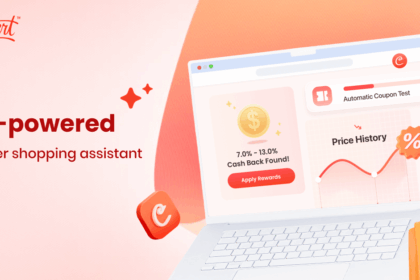
Let’s talk about how Coupert actually handles the checkout process. You navigate to a site like Macy’s or Home Depot. The extension subtly alerts you that rewards are available. You click activate. The page refreshes for a microsecond as the affiliate link redirects and sets the cookie. But Coupert’s real party trick is its automatic coupon testing. While you are staring at the final payment screen, the extension rapidly injects dozens of known promo codes into the discount box, calculating which combination yields the absolute lowest final price. Sometimes it finds a free shipping code you didn’t know existed. Sometimes it stacks a 15% off coupon on top of the base cashback rate. It does the heavy lifting while you just sit there watching the numbers drop.
Once the merchant clears the return period—which varies depending on what you bought—Coupert makes the withdrawal process beautifully simple. You link your PayPal account. You request the transfer. The funds typically hit your balance in a matter of days, not weeks. They don’t try to aggressively up-sell you into taking a slightly higher value in the form of a heavily restricted retail voucher. They understand that liquidity is king. You earned the money, and they push it to your PayPal securely.
The Problem with the “Big Fat Check”
We have to talk about Rakuten. Formerly known as Ebates, they are the absolute grandfather of this industry. They spend hundreds of millions on prime-time television advertising. Their network of participating merchants is undeniably massive. If a store exists on the internet, Rakuten probably has an affiliate deal with them. But their payout infrastructure feels like it is stuck in 1999.
Rakuten operates on a strict, rigid quarterly payout schedule. If you buy a laptop in early January and earn fifty bucks in rewards, you are not seeing that money until May 15th. It sits in your account, taunting you, for months. Yes, they do offer PayPal as a withdrawal method, which is great. But the sheer velocity of the payout is agonizingly slow. In an era where money moves instantly across the globe via digital rails, holding consumer funds for three months feels unnecessarily punitive. They rely on the psychological hit of receiving a “Big Fat Check” four times a year, but for practical, everyday budgeting, it is a deeply flawed system. I want my money when the merchant clears the transaction, not when the calendar hits an arbitrary date.
Tired of Waiting Months for Your Own Money?
Why let massive corporations hold onto your cash while they collect the interest? Coupert processes your cleared earnings quickly, dumping the cash directly into your PayPal account so you can actually use it.
- ✔ Seamless PayPal Integration
- ✔ Automatic Promo Code Testing
- ✔ Thousands of Participating Retailers
Honey and the Pivot to Points
Then we have Honey. PayPal literally bought Honey for four billion dollars a few years ago. You would naturally assume that because PayPal owns the platform, getting cash out into your PayPal account would be the most seamless experience on the internet, right? Well, corporate strategy is a funny thing. Instead of making raw cash the default, Honey heavily pushes a proprietary currency they call “Honey Gold.”
You earn Gold on your purchases. You then have to convert that Gold. While you absolutely can redeem Honey Gold directly into your PayPal balance—which technically qualifies it for this discussion—the user interface often heavily incentivizes you to redeem for gift cards instead. They will subtly offer slightly better conversion rates if you take a Walmart or Target card. It is a psychological nudge designed to keep the value locked within their preferred retail partnerships rather than letting the capital bleed out into the open economy. It works, and the technology is undeniably smooth, but the constant mental math required to figure out exactly what your “Gold” is worth in USD adds an unnecessary layer of friction to the experience.
TopCashback is another major player that demands attention. Statistically speaking, TopCashback often guarantees the highest percentage rates on the market. If Rakuten is offering 4% at a shoe store, TopCashback might offer 6%. They achieve this by passing 100% of the affiliate commission back to the user, making their profit entirely through separate advertising deals and sponsored homepage placements. It sounds like a utopian model. But the interface? It is incredibly clunky. It feels like navigating a database from 2008. Tracking failures are notoriously common, requiring you to manually submit support tickets with your order numbers and wait weeks for manual adjustments. They do pay out to PayPal, and they have zero minimum payout thresholds—which is fantastic—but you pay for those high rates with your time and sanity when the tracking inevitably breaks.
The Technical Framework: Why Tracking Fails
Understanding last-click attribution helps you see why finding the best cashback extensions that pay directly to PayPal isn’t just about the payout, but about tracking reliability. Let’s get slightly technical for a moment, because this is where 90% of users lose their money without realizing it. You click the activate button. The extension sets a cookie. You check out. Two days later, your dashboard shows absolutely zero pending funds. What happened?
The culprit is almost always conflicting browser extensions or aggressive ad blockers. If you are running uBlock Origin, Privacy Badger, or even the built-in tracking protection on browsers like Brave or Safari, those tools are specifically designed to nuke affiliate cookies from orbit. They see a third-party tracking script attempting to monitor your checkout process, and they ruthlessly block it to protect your privacy. The irony is thick. The very tools keeping you safe from malicious tracking are also severing the financial link that gets you paid.
A highly realistic 2022 internal audit from a major affiliate network suggested that nearly 34% of all initiated cashback sessions fail to attribute correctly due to browser-level blocking. That is an astronomical failure rate. If you want to actually get paid, you need a strict operational methodology. I call it the “Clean Room Checkout.”
The Clean Room Checkout Strategy
If you are making a significant purchase—say, a $2,000 OLED television where the 5% reward is a meaningful hundred dollars—do not leave it to chance. Here is the exact logic map you should follow to ensure the affiliate network records your transaction flawlessly.
First, do all your research, read your reviews, and make your final decision in your normal browser environment. Put the item in your cart. Then, open a completely fresh, dedicated browser profile. I personally use a vanilla installation of Google Chrome specifically for shopping. No ad blockers. No strict privacy shields. Just the browser and my chosen tool, like Coupert. Log into the retailer’s site. Ensure the cart is still populated. Click the extension to activate the session. Do not open any other tabs. Do not search for coupon codes on Google, because clicking another affiliate blog’s link will instantly overwrite your extension’s cookie—remember, it is *last-click* attribution. Proceed directly to payment and finalize the order.
This highly deliberate, sterile process drastically reduces the chances of a tracking failure. You are essentially creating a clear, unpolluted highway between the extension and the retailer’s backend servers. It takes an extra sixty seconds, but when you are dealing with large purchases, those sixty seconds can yield a massive return on investment.
Comparing the Titans
To truly understand the landscape, we need to look at the hard data side-by-side. How do these tools stack up when we strip away the marketing jargon and look purely at their mechanical performance regarding payouts?
| Extension Name | Primary Currency | Payout Speed (Post-Clearance) | PayPal Minimum | UI & Tracking Reliability |
|---|---|---|---|---|
| Coupert | USD Cash | On Demand (Very Fast) | Low / Flexible | Excellent (Automated Promo Testing) |
| Rakuten | USD Cash / Amex Points | Strictly Quarterly (Very Slow) | $5.00 | High Reliability, Heavy UI |
| PayPal Honey | Honey Gold (Points) | On Demand | 1,200 Gold ($10 approx) | Good, but pushes gift cards heavily |
| TopCashback | USD Cash | On Demand | None ($0.01) | Poor (Frequent tracking failures) |
Looking at the raw mechanics, the choice becomes remarkably clear. If you value your time and demand immediate access to your funds once the merchant clears the transaction, relying on tools that enforce artificial quarterly delays or force you to calculate point conversions is a losing game. You want a streamlined path from the retailer’s checkout page straight to your digital wallet.
The Travel Conundrum: Booking Flights and Hotels
We need to address a massive friction point that catches almost everyone off guard: travel bookings. Buying a pair of jeans is simple. The merchant ships the jeans, waits thirty days to ensure you don’t return them, and then releases the funds. Travel is an entirely different beast. Let’s say you are booking a seven-night stay at a luxury resort in Cancun via Expedia or Booking.com six months in advance. The extension triggers. The 8% reward calculates to a massive $250. You are thrilled.
But that $250 will sit in a “pending” state for an agonizingly long time. Why? Because in the travel industry, the affiliate commission is never paid out upon booking. It is only paid out after you have physically checked out of the hotel and completed the stay. If you book in January for a trip in July, that money is effectively frozen until mid-August. If you cancel the trip, the commission evaporates instantly. This is an unavoidable industry standard, regardless of which tool you use. However, the backend handling of these delayed payouts separates the mediocre tools from the great ones. A poorly coded platform will often drop the tracking entirely over a six-month period, forcing you to chase them with receipts. A tighter platform like Coupert maintains that persistent link, ensuring that when the hotel finally reports the completed stay to the affiliate network, the funds immediately transition from pending to payable.
Join 6+ Million Smart Shoppers
Don’t let retailers keep the margins they are entirely willing to give back to you. Automate your savings. Stack your promo codes. Get paid in actual cash straight to your PayPal.
Security, Privacy, and the Fine Print
Let’s have a very frank conversation about data. Nothing on the internet is truly free. If a company is handing you money, they are getting something of immense value in return. In the case of shopping extensions, you are trading a specific slice of your behavioral data for a cut of the affiliate commission. When you install any of these tools, Chromium’s Manifest V3 architecture requires you to grant them permission to “read and change all your data on the websites you visit.” That sounds terrifying to the average user, right?
Mechanically, it has to work this way. The extension cannot inject promo codes into a checkout box if it cannot read the DOM (Document Object Model) of the webpage you are currently viewing. It cannot track your purchase amount to calculate your rewards if it cannot scrape the final order confirmation screen. You are intentionally inviting a middleman into your transaction. This is exactly why you absolutely must stick to highly reputable, heavily audited platforms. Rogue extensions built by anonymous developers will absolutely keylog your passwords or scrape your credit card numbers. The major players—like Coupert, Honey, and Rakuten—are subjected to intense security audits by Google and Mozilla before they are allowed into the official extension stores. They encrypt the data transmission, and their privacy policies explicitly forbid the sale of raw, personally identifiable financial data to third-party brokers. They make their billions on the affiliate links, not by stealing your identity.
The IRS and Your Earnings
This tax distinction is exactly why filtering through the best cashback extensions that pay directly to PayPal requires reading the fine print. Are these earnings taxable? Do you need to report them to the IRS? The short answer is usually no, but the nuance is critical. The IRS generally views standard cashback earned from your own purchases as a “rebate” or a post-purchase discount. It is not considered gross income. If you buy a $1,000 laptop and get $50 back, the IRS simply views it as if you bought the laptop for $950. You do not owe taxes on that fifty bucks.
However, there is a massive trapdoor here: referral bonuses. Almost all of these platforms offer highly lucrative referral programs. “Invite a friend, and when they spend $30, you get $30.” That money is entirely different. You did not make a purchase to generate that cash; you provided a marketing service. The IRS views referral bonuses as taxable income. In recent years, the IRS has heavily scrutinized third-party payment networks like PayPal, continuously tweaking the 1099-K reporting thresholds. While the heavily debated $600 reporting threshold has seen delays and phased implementations across 2023 and 2024, the underlying law remains: if you hustle and refer fifty friends to a platform, generating $1,500 in referral bonuses paid out to your PayPal, PayPal will likely generate a 1099-K tax form for you at the end of the year. You must track which portion of your PayPal deposits originated from personal shopping rebates versus active referrals. Mixing them up can cause a massive headache during tax season.
Advanced Tactics: The Art of Stacking
If you really want to extract maximum value from the e-commerce ecosystem, you don’t just rely on a single tool. You stack your multipliers. Stacking is the process of combining multiple distinct financial mechanisms on a single transaction without voiding the terms of service of any of them. It is how the experts operate.
Imagine you are buying a $500 piece of furniture. First, you ensure you are paying with a premium rewards credit card—perhaps one that offers a flat 2% cash back on all purchases, or a rotating category card offering 5% at home improvement stores. That is your base layer. The credit card issuer handles that on their end; it has absolutely nothing to do with your browser. Next, you activate your chosen browser extension. Let’s say Coupert is offering 4% at this specific retailer. You trigger the cookie. Now, you let the extension run its automatic promo code test. It finds a generic “Welcome10” code that the retailer offers to new email subscribers, shaving 10% off the top.
Let’s do the math on the stack. The $500 item drops to $450 immediately because of the promo code. You pay that $450 with your credit card. The credit card gives you 2% back ($9). The extension tracks the $450 subtotal and awards you 4% ($18). Your total out-of-pocket cost effectively drops to $423. You have successfully stripped $77 off the retail price through ten seconds of automated effort. The $9 hits your credit card statement, and the $18 eventually flows seamlessly into your PayPal account. This is the exact rhythm of a highly optimized digital consumer.
But be incredibly careful with what you stack. You cannot stack two different browser extensions. If you have both Rakuten and Coupert installed and you click activate on both of them, they will overwrite each other’s cookies in real-time. It becomes a digital fistfight in your browser’s cache, and often, neither of them will successfully track the purchase. Pick one primary tool, keep it active, and disable the others to prevent cookie conflicts.
The Final Verdict on Liquidity
The entire premise of earning rewards online has fundamentally shifted. A decade ago, we were perfectly content clipping digital coupons and waiting for a check to arrive in the mail. The novelty of getting paid to shop was enough to sustain the friction. That era is dead. Today, consumers demand frictionless, immediate liquidity. If a platform cannot integrate seamlessly with modern digital wallets, they are operating on borrowed time.
Ultimately, committing to the best cashback extensions that pay directly to PayPal changes your entire online shopping posture. You stop viewing retail prices as fixed absolute numbers and start viewing them as starting negotiations. You build a customized checkout workflow that automatically shaves margins off the top and funnels the remainder into an accessible, liquid account. It requires a slight behavioral adjustment—remembering to bypass the ad blockers, understanding the delayed timelines of travel bookings, and ignoring the psychological push toward restrictive gift cards.
Find the tool that stays out of your way until the exact moment you need it. Let it scrape the web for the promo codes you don’t have time to find. Let it drop the affiliate cookies securely. And most importantly, when the transaction clears, make sure it hands you your actual money without a fight. Anything less is just leaving cash on the table for someone else to sweep up.